Vegan proteins are now a central concern in plant-based diets. Whether you’re vegan, vegetarian, or transitioning to a plant-based diet, understanding how much protein you actually need, what the best sources are, and how to optimize its quality is essential for staying healthy and achieving your goals.
Contrary to popular belief, it’s entirely possible to meet your protein needs with a plant-based diet. But to do so, simply counting grams isn’t enough: you also need to understand the concepts of protein quality, amino acids, and the complementary nature of different foods.
Why focus on vegan proteins? Proteins play a key role in the body: maintaining muscle mass, providing energy, and aiding recovery. In plant-based diets, some sources are less rich in certain essential amino acids, which necessitates a more structured approach.
That’s precisely the goal of this section: to help you understand how to easily optimize your vegan protein intake, without any hassle.
Everything you’ll learn in these articles
In this category, you’ll find comprehensive guides to:
- Determining how much vegan protein you should consume each day
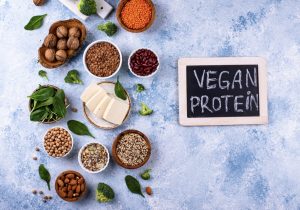
- Identifying the best sources of plant-based protein
- Understanding protein quality (DIAAS, amino acids)
- Optimizing your diet for sports and muscle gain
- Comparing vegan protein with animal protein (whey)
A simple approach to optimizing your vegan protein
Good news: you don’t need complex calculations to do it right. A simple strategy is to:
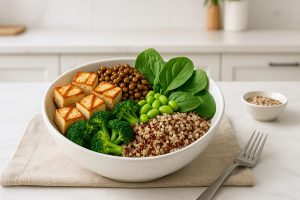
- Choose a main protein source at each meal (tofu, legumes, seitan, etc.)
- Add a complementary source (grains, seeds, etc.)
- Vary your foods throughout the day to ensure you get all the essential amino acids
With these basics, you can easily reach your goals, whether for your health or athletic performance.
Go further with precise tracking
In practice, most people think they consume enough protein… but don’t measure it. The result: insufficient intake, amino acid imbalance, or a plateau.
This is exactly why tools like Veg’Up Nutrition allow you to precisely track your vegan protein, analyze your sources and optimize your daily diet.